
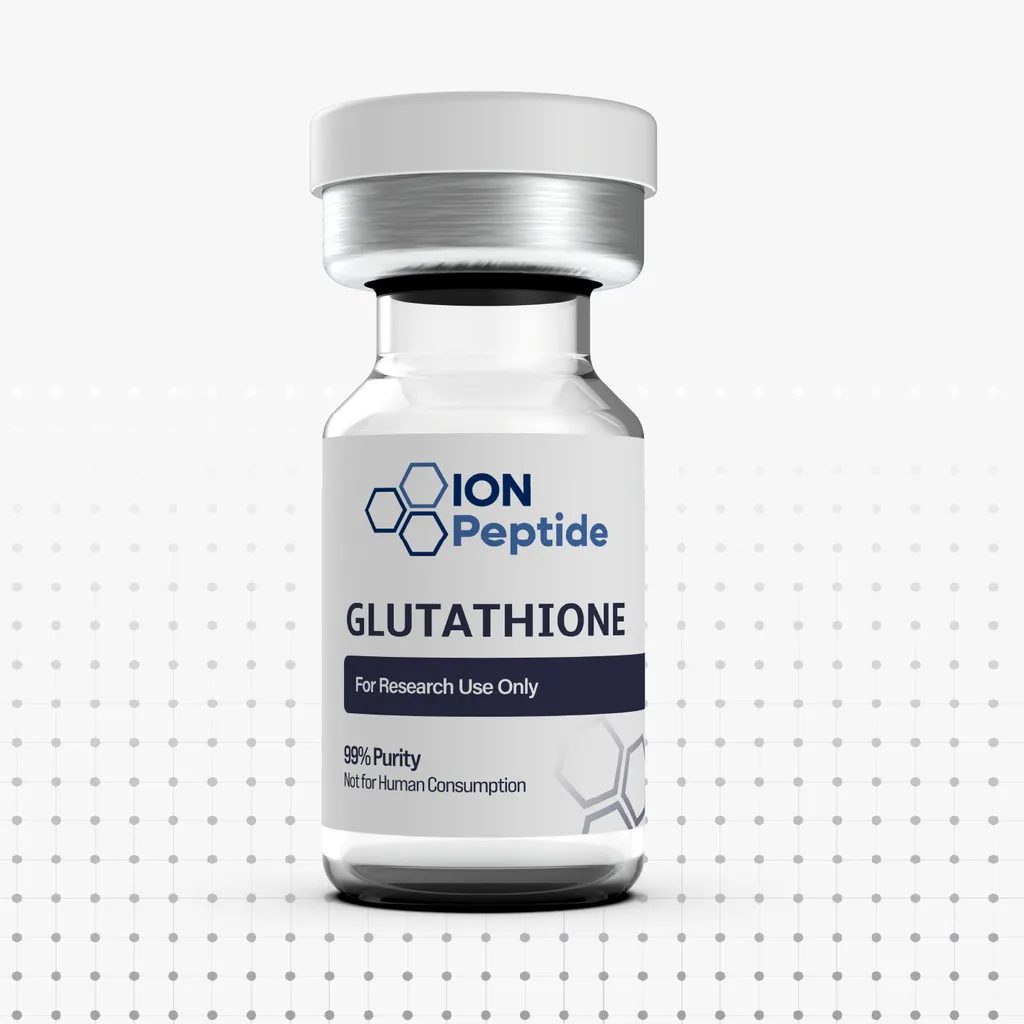
When evaluating glutathione peptide for research purposes, consistent quality testing, batch traceability, and transparent analytical documentation are important considerations. Ion Peptide emphasizes the importance of reliable quality-control procedures when evaluating research compounds, while Ion Peptide also supports clear batch-specific documentation that allows researchers to understand analytical results. For Ion Peptide, quality assessment should focus on measurable characteristics such as identity, purity, content, impurities, and documented laboratory procedures rather than unsupported marketing claims.
Understanding Glutathione as a Research Compound
Glutathione is a naturally occurring tripeptide composed of glutamate, cysteine, and glycine. It is widely studied in biochemical and cellular research because of its role in redox regulation and antioxidant systems.
The term glutathione peptide is commonly used when discussing this compound in research and commercial contexts. However, researchers should distinguish the descriptive term from the actual chemical identity and analytical specifications of the material being tested.
For quality evaluation, the key question is not simply whether a material is labeled as glutathione peptide, but whether its identity, purity, composition, and batch information have been appropriately documented.
Why Quality Standards Matter
Quality standards help establish consistent expectations for research materials. They provide a framework for evaluating whether a batch meets defined specifications and whether analytical results are sufficiently documented.
Ion Peptide can use a structured quality-control framework to separate identity testing, purity assessment, assay or content determination, and impurity evaluation. This makes the documentation easier to interpret and reduces the risk of treating one laboratory result as proof of every quality characteristic.
Identity Testing
Identity testing determines whether the material corresponds to the compound described in the documentation. Because glutathione has a defined molecular structure and composition, analytical techniques can be selected to provide evidence supporting its identity.
For glutathione peptide, identity testing should be distinguished from purity testing. A purity percentage alone does not necessarily establish molecular identity.
Analytical Techniques
Depending on the laboratory's validated procedures and specifications, analytical characterization may involve chromatography, mass spectrometry, spectroscopy, or other suitable techniques.
Chromatographic methods can separate components and provide information about the primary compound and related substances. Mass spectrometry can provide molecular-mass information that supports identification.
Ion Peptide documentation should clearly state which analytical method was used and what the reported result demonstrates. This helps researchers evaluate the evidence without making assumptions beyond the scope of the test.
Purity Testing Standards
Purity testing evaluates the proportion of the desired compound relative to other detectable components under a defined analytical method. High-performance liquid chromatography is commonly used for chemical analysis of compounds and can provide a chromatographic profile.
For glutathione peptide, a reported purity percentage should always be interpreted together with the analytical method, chromatogram where available, specifications, and testing conditions.
A high purity value does not automatically establish sterility, endotoxin status, stability, or suitability for a particular application. Those characteristics require appropriate additional testing.
Understanding Chromatographic Results
Chromatographic analysis can provide a useful picture of the sample composition. Researchers may review the principal peak, additional peaks, retention characteristics, and reported purity calculation.
The analytical method is important because different methods can have different capabilities and limitations. A complete quality assessment should therefore consider both the result and the procedure used to obtain it.
Batch-Specific Documentation
Batch documentation establishes traceability between a physical research compound and its analytical results. A unique lot number allows quality records to be associated with a defined production batch.
For glutathione peptide, researchers should check whether the Certificate of Analysis identifies the same lot number shown on the material or accompanying documentation.
Ion Peptide can strengthen traceability by maintaining consistent identifiers across production records, testing reports, storage information, and Certificates of Analysis.
Important Batch Information
A detailed batch record may include:
- Product or compound name
- Batch or lot number
- Manufacturing or production date
- Testing date
- Laboratory identification
- Analytical methods
- Identity results
- Purity results
- Assay or content information
- Relevant impurity findings
- Applicable specifications
- Acceptance criteria
The more clearly these elements are connected, the easier it becomes for researchers to assess the quality history of a particular batch.
Independent Laboratory Verification
Independent testing can provide an additional level of analytical review. In this approach, a sample from a defined batch is evaluated by an external laboratory using appropriate analytical procedures.
For glutathione peptide, independent verification can help provide additional evidence regarding identity, purity, or other defined quality characteristics. However, independent testing should still be interpreted according to the scope of the laboratory's report.
Ion Peptide can incorporate independent laboratory results into a broader documentation system while maintaining clear connections between the tested sample and its corresponding batch.
What to Check in a Third-Party Report
Researchers reviewing an independent report should look for the laboratory's identity, testing date, sample or batch identifier, analytical method, results, and relevant specifications.
A statement such as “third-party tested” provides limited information if the supporting report cannot be reviewed. Transparent documentation is more valuable because it allows qualified reviewers to understand what was actually measured.
Certificate of Analysis
A Certificate of Analysis, commonly called a CoA, summarizes testing performed on a defined material or batch. It can be one of the most useful documents when evaluating research compounds.
A CoA for glutathione peptide may report identity, purity, assay or content, and other applicable analytical characteristics. Researchers should determine whether the certificate is specific to the batch being evaluated.
Features of a Useful CoA
A useful CoA should be clear, legible, dated, and traceable. It should identify the tested material and provide relevant analytical information rather than relying only on generalized quality statements.
Ion Peptide can improve transparency by ensuring that batch numbers, analytical methods, laboratory details, and results are consistently documented.
Assay and Content Determination
Purity and content are not necessarily identical measurements. Purity generally describes the relative composition detected by an analytical method, while assay or content determination can provide quantitative information about the target compound.
For glutathione peptide, researchers should therefore examine how the reported value was determined and whether the document clearly distinguishes purity from assay.
Why the Distinction Matters
A material can show a strong chromatographic profile while still requiring additional quantitative evaluation. The analytical method and reference materials used for quantification can influence how the result should be interpreted.
Ion Peptide documentation should present each quality attribute according to the actual analytical procedure used.
Impurity Evaluation
Impurities can arise from manufacturing, degradation, storage, or other processes. Appropriate analytical procedures can help detect and characterize relevant additional components.
For glutathione peptide, impurity evaluation should be considered alongside identity and purity testing. Researchers should avoid assuming that a single purity number accounts for every possible impurity.
Stability-Related Considerations
Storage conditions can influence the stability of chemical research materials. Temperature, moisture, light exposure, container conditions, and handling practices may all be relevant depending on the material.
Documentation should therefore provide appropriate storage information when applicable. Researchers should follow the specified handling and storage requirements rather than assuming that all peptide-related materials have identical stability characteristics.
Quality-Control Checklist
Researchers evaluating glutathione peptide documentation can use the following checklist:
- Is the chemical identity clearly stated?
- Is the batch or lot number provided?
- Does the CoA match the relevant batch?
- Is the testing date documented?
- Is the laboratory identified?
- Are analytical methods described?
- Is identity testing documented?
- Is purity testing reported?
- Is assay or content clearly distinguished from purity?
- Are relevant impurities addressed?
- Is independent verification available?
- Are storage and handling requirements documented?
This approach provides a practical way to review analytical evidence systematically.
Frequently Asked Questions
1. What is glutathione peptide quality testing?
glutathione peptide quality testing involves analytical procedures used to evaluate characteristics such as chemical identity, purity, content, and relevant impurities. The exact testing program depends on the material specifications and research requirements.
2. Is glutathione actually a peptide?
Yes. Glutathione is a tripeptide consisting of three amino acids: glutamate, cysteine, and glycine. It is often discussed in biochemical research because of its involvement in cellular redox processes.
3. Does a high purity percentage prove identity?
No. Purity and identity are separate analytical characteristics. An appropriate identity test should be considered alongside chromatographic purity data.
4. Why is batch-specific documentation important?
Batch-specific documentation connects laboratory findings with a defined production lot. This improves traceability and helps researchers determine whether analytical results apply to the particular material being evaluated.
5. What should a quality Certificate of Analysis contain?
A useful CoA can include the compound name, batch number, testing date, analytical methods, identity results, purity findings, assay or content information, laboratory details, and applicable specifications.
Conclusion
Quality testing provides an important foundation for evaluating research compounds. Glutathione peptide should be assessed through appropriate analytical methods that address identity, purity, content, and relevant impurities while maintaining clear batch traceability.
Ion Peptide supports a documentation approach that separates individual quality attributes and connects analytical results to identifiable production lots. Independent laboratory verification, when appropriately documented, can provide additional analytical evidence and help researchers review quality information more objectively.
Ultimately, Ion Peptide quality documentation is most useful when it clearly explains what was tested, which method was used, when the testing occurred, and which batch the results represent. By reviewing Certificates of Analysis alongside analytical methods and batch records, researchers can make more informed assessments of research-grade glutathione materials.