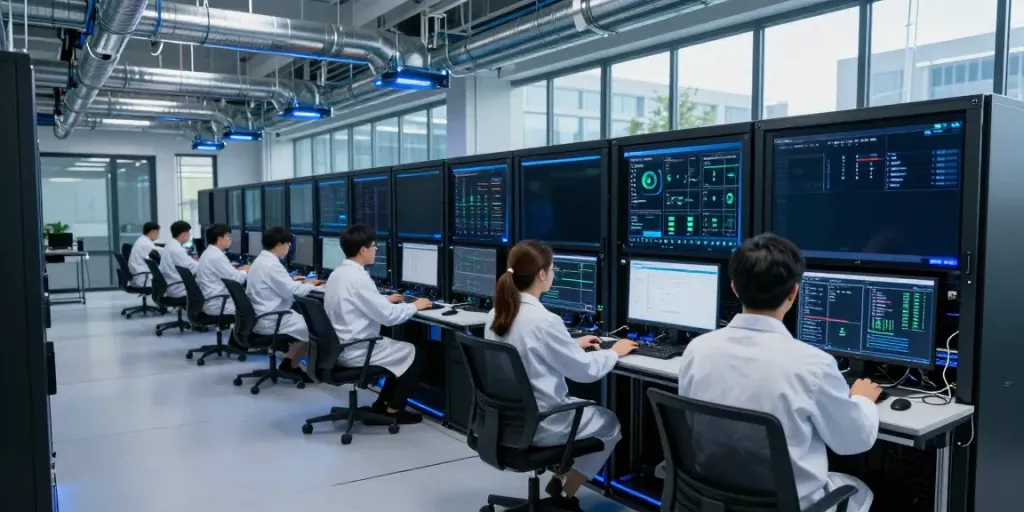
Understanding the AI Data Center Landscape
The landscape of AI data centers is transforming rapidly, fueled by the growing demand for artificial intelligence applications and services. As businesses increase their reliance on AI technologies, the need for robust infrastructure capable of supporting intensive workloads becomes paramount. An AI data center is not merely a facility housing servers; it is a specialized environment optimized for high-performance computing that empowers the development and deployment of AI solutions. AI data center configurations are designed to meet specific operational requirements, ensuring that the computational needs of various AI applications are met effectively and efficiently.
What is an AI Data Center?
AI data centers are purpose-built facilities that house the necessary hardware and software to train, validate, and deploy AI models. These centers incorporate advanced infrastructure, including high-density GPU servers, networking equipment, and cooling systems to handle the heat generated by the massive processing power required for AI tasks. Unlike traditional data centers, AI data centers focus specifically on handling AI workloads, often implementing optimized architectures to ensure peak performance.
Key Components of AI Data Centers
Several components are critical in the construction and operation of AI data centers:
- High-Performance GPUs: Graphics Processing Units (GPUs) are crucial for performing parallel processing required in AI workloads, making them the heart of AI data centers.
- Networking Infrastructure: High-speed and low-latency networking are essential to facilitate data transfer between servers and storage, as AI applications often involve large datasets.
- Power Management: Efficient power distribution and backup systems ensure that AI data centers can maintain operations continuously, which is vital for time-sensitive AI tasks.
- Cooling Systems: Advanced cooling solutions are necessary to prevent overheating in facilities filled with high-density computing resources.
The Role of GPU Technology in AI
At the core of AI data centers lies GPU technology, which has revolutionized the way AI models are trained and deployed. GPUs boast thousands of cores, allowing them to process multiple data points simultaneously, which is essential for deep learning models. The specific requirements of AI workloads necessitate a shift from traditional CPU-based computing to GPU-centric architectures, resulting in significantly improved performance metrics and reduced training times.
The Importance of Power Infrastructure
Power infrastructure is the backbone of AI data center operations, as it ensures that the enormous computational power required by AI workloads can be consistently delivered. Power management strategies are critical for optimizing the energy consumption and operational costs of AI facilities. As AI continues to evolve, sustainable energy practices and efficient power usage will play a pivotal role in the operational strategy of AI data centers.
Power Requirements for AI Operations
AI workloads often demand substantial energy, particularly during periods of high computational intensity. Consequently, understanding the power requirements is essential for designing effective AI data centers. Factors such as peak load management, energy efficiency metrics, and the integration of renewable energy sources are vital components of power strategy, ensuring a balance between computational performance and operational costs.
Sustainable Energy Practices in AI Data Centers
With the growing concerns over climate change and energy consumption, AI data centers are increasingly looking towards sustainable energy practices. This includes using renewable energy sources, optimizing power usage effectiveness (PUE), and employing advanced cooling techniques that minimize energy consumption without compromising performance. By emphasizing sustainability, AI data centers can reduce their carbon footprint and contribute positively to the environment.
Measuring Efficiency and Performance Metrics
To ensure that AI data centers operate efficiently, it is crucial to implement robust performance measurement frameworks. Key performance indicators (KPIs) such as energy consumption per workload, average response time, and system uptime are essential for evaluating the operational efficiency of AI data centers. Regular performance assessments can help identify areas for improvement and enhance overall service delivery.
Participating in the AI Token Economy
The AI Token Economy is a novel framework where computational resources are tokenized, allowing users to participate in and benefit from AI infrastructure operations. This new economic model not only incentivizes participation but also contributes to a more scalable and efficient AI ecosystem. AI data centers play a significant role in enabling these token-meted services, creating a direct link between energy consumption and AI service delivery.
How AI Data Centers Enable Token-Metered Services
AI data centers enable token-metered services by integrating energy consumption with AI workloads. Each transaction or computational task performed in the data center generates data, which can be tokenized, allowing participants to earn rewards based on their contributions. This innovative model aligns financial incentives with the operational performance of AI data centers, creating a mutually beneficial ecosystem for users and service providers alike.
Your Role in Contributing to AI Infrastructure
As a participant in the AI Token Economy, individuals can contribute to the overall performance and sustainability of AI infrastructure. This can be done through various means, such as investing in energy-efficient technologies, supporting renewable energy initiatives, and engaging with AI data centers to leverage their capabilities. By contributing valuable resources, individuals can help foster a robust AI ecosystem that delivers tangible benefits for society as a whole.
Calculating Rewards from Power Contribution
Calculating rewards for contributions within the AI Token Economy involves assessing several factors, including the energy consumed, the efficiency of AI workloads, and the overall operational performance of the data center. Participants can track their contributions and corresponding rewards transparently, ensuring that the token economy remains fair and equitable for all stakeholders. This transparency is essential for maintaining trust and encouraging further participation in the AI infrastructure.
Challenges and Misconceptions
Despite the advantages presented by AI data centers, several challenges and misconceptions exist that can hinder their development and functionality. Addressing these concerns head-on is crucial for advancing the AI infrastructure landscape.
Common Obstacles in Building AI Data Centers
Challenges in building AI data centers often include high capital costs, regulatory hurdles, and difficulties in sourcing energy-efficient technologies. Additionally, the rapid evolution of AI technology can lead to obsolescence, requiring ongoing investments in equipment and training to stay current.
Myths About AI Infrastructure and Efficiency
There are prevalent myths surrounding AI infrastructure that can lead to misconceptions about its efficiency. For instance, many believe that AI workloads are inherently inefficient or that power consumption is excessively high. In reality, AI data centers can achieve high efficiency when designed and managed correctly, focusing on optimizing resource allocation and energy use.
Regulatory Issues and Compliance in the Industry
Compliance with local and federal regulations can pose challenges for AI data centers. Issues regarding data privacy, energy consumption, and environmental impact must be navigated carefully to ensure that operations align with legal requirements. Engaging with regulatory authorities early in the planning process can help mitigate issues and streamline compliance efforts.
Future Trends and Innovations in AI Data Centers
As technology continues to advance, several trends and innovations are expected to shape the future of AI data centers. Staying ahead of these developments will be crucial for organizations looking to optimize their AI infrastructure.
Emerging Technologies Shaping the AI Landscape
Emerging technologies such as quantum computing, advanced machine learning algorithms, and edge computing are set to revolutionize AI data centers. These technologies can enhance computational capabilities, reduce latency, and optimize resource utilization, ultimately leading to improved performance across AI applications.
Predictions for AI Data Center Development in 2026
By 2026, AI data centers are expected to evolve towards greater energy efficiency and sustainability. Predictions include the widespread adoption of green technologies, enhanced automation in data center operations, and the integration of AI-based management systems that optimize energy use and workload distribution.
How Businesses Can Adapt to Changes in AI Infrastructure
To adapt to changes in AI infrastructure, businesses should remain flexible and open to incorporating new technologies. This includes investing in scalable solutions, leveraging partnerships with AI data centers, and prioritizing sustainability initiatives. By taking proactive steps, organizations can ensure they remain competitive in the rapidly evolving AI landscape.
What is the AI data center?
An AI data center, distinct from traditional data centers, is designed specifically for high-performance AI tasks. It utilizes advanced hardware, such as high-density GPUs, and sophisticated infrastructure to support the demanding computational needs of AI applications.
Where are most AI data centers located in the US?
AI data centers are predominantly located in tech-centric regions, such as Silicon Valley, Seattle, and Austin. These locations offer access to essential resources, skilled labor, and robust infrastructure to support AI operations.
Who is the largest AI data center?
The title of the largest AI data center is often contested, but companies like Google and Microsoft operate some of the most extensive AI data center facilities worldwide, capitalizing on their vast technological resources and expertise.
What does Trump say about data centers?
While specific statements made by political figures like Donald Trump on data centers may vary, the broader discussion surrounding data centers often encompasses economic, environmental, and regulatory implications that affect the AI industry and its growth.